Ecuador's Cocaine Superhighway: Police Battle Gangs in Drug War
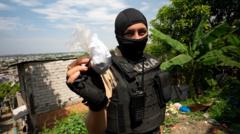
Ecuador's Cocaine Superhighway: Inside the Battle Against Organized Crime
The cocaine superhighway running from Ecuador to European markets represents one of the most significant trafficking challenges facing law enforcement in Latin America. As documented by BBC investigations, this dangerous network has transformed Ecuador into a critical nexus point for international drug cartels, prompting unprecedented police response and tactical operations across the nation.
Understanding the Cocaine Trade Route
Ecuador's strategic geographic location between Peru and Colombia, combined with access to major Pacific ports, has made it an indispensable hub for organizations trafficking narcotics to global markets. The cocaine superhighway operates through sophisticated supply chains involving multiple criminal organizations, each controlling specific segments of production, transportation, and distribution networks.
Port cities like Guayaquil have emerged as critical transit points where containers filled with cocaine are consolidated before being shipped to Europe, Africa, and other continents. The scale of operations has grown exponentially, with law enforcement agencies reporting record seizures year after year.
Police Operations and Strategic Response
Ecuador's National Police force has intensified patrol operations in high-risk areas where trafficking organizations maintain operational bases. Officers working on the frontlines face extraordinary dangers, confronting heavily armed criminal groups protected by sophisticated surveillance systems and communication networks.
Patrol units, often operating in pairs or small teams, conduct regular sweeps through neighborhoods controlled by drug trafficking organizations. These operations involve checkpoint inspections, vehicle searches, and intelligence-led operations targeting known cartel members and distribution points.
Training and Equipment Challenges
Police personnel involved in combating the cocaine superhighway receive specialized training in surveillance techniques, firearms handling, and tactical response procedures. However, officers frequently report resource constraints that limit their effectiveness against better-equipped criminal networks. Body armor, modern communication devices, and transportation infrastructure remain critical needs for frontline units.
The Scale of the Cocaine Crisis
Recent seizure data demonstrates the massive volume of narcotics flowing through Ecuador's cocaine superhighway networks. Annual cocaine interdictions have reached record levels, yet law enforcement officials acknowledge these represent only a fraction of total trafficking volumes.
The organization behind cocaine production and distribution operates with military-style discipline, employing compartmentalized structures that insulate leadership from street-level operations. This hierarchical approach makes disrupting the cocaine superhighway exceptionally difficult, as removing individual participants has minimal impact on overall trafficking capacity.
Transnational Coordination Efforts
Combating the cocaine superhighway requires international cooperation between Ecuador's police and enforcement agencies in destination countries throughout Europe and beyond. Intelligence sharing agreements, joint training initiatives, and coordinated maritime interdiction operations represent crucial components of a broader strategy addressing organized crime networks.
European authorities have established specialized units focused specifically on intercepting cocaine shipments originating from Ecuador and other Andean suppliers. Port authorities in Spain, Netherlands, and Belgium coordinate with Ecuadorian counterparts to identify suspicious containers before they enter European distribution networks.
Community Impact and Safety Concerns
The cocaine superhighway's expansion has created significant public safety challenges in Ecuador's major urban centers. Neighborhoods dominated by trafficking organizations experience elevated violence rates, with territorial disputes between rival cartel factions resulting in civilian casualties.
Community policing initiatives attempt to rebuild relationships between police and residents living in cartel-controlled territories. These programs face considerable challenges, as residents fear retaliation from criminal organizations if they cooperate with law enforcement authorities investigating the cocaine superhighway operations.
Future Challenges and Perspectives
Police leadership acknowledges that disrupting the cocaine superhighway requires sustained commitment and resource allocation beyond current levels. The profitability of cocaine trafficking ensures that organizations will continue recruiting new members and investing in increasingly sophisticated smuggling methodologies.
Long-term success against the cocaine superhighway depends on addressing underlying economic factors that motivate participation in drug trafficking organizations. Education programs, employment opportunities, and rural development initiatives represent essential components alongside enforcement operations conducted by police and international partners.


