Hamas Disarmament Plan: Challenges and Possibilities for Gaza Peace
Hamas Disarmament Plan: A Complex Path to Peace in Gaza
The prospect of a Hamas disarmament plan represents one of the most challenging yet potentially transformative developments for Gaza's future. Such an initiative would require unprecedented cooperation, trust-building mechanisms, and international oversight to navigate the intricate political landscape shaped by decades of conflict. The Hamas disarmament plan faces enormous hurdles rooted in the region's deeply entrenched positions and historical grievances.
Political Obstacles and Trust Deficits
Any meaningful Hamas disarmament plan must contend with fundamental trust deficits among all stakeholders. The Israeli government, Palestinian authorities, and international mediators each bring competing security interests and political agendas to the negotiating table. The political dimension of such an agreement extends beyond military considerations, encompassing questions of governance, representation, and legitimacy within Palestinian society. Years of confrontation have created deep institutional skepticism that cannot be overcome through diplomatic rhetoric alone.
Historical Context of Failed Negotiations
Previous attempts at comprehensive peace settlements have foundered on the rocks of competing territorial claims, refugee rights, and the status of Jerusalem. The Hamas disarmament plan would necessarily build upon this fraught history, requiring negotiators to address unresolved issues that have stymied progress for decades. Each party brings accumulated grievances and broken promises from past negotiations, making the establishment of good faith commitment extraordinarily difficult.
The Human and Physical Toll
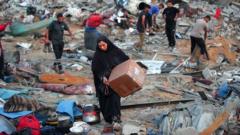
The destruction wrought by recent and ongoing conflict presents enormous practical challenges to any disarmament initiative. Thousands of casualties, countless displaced persons, and vast tracts of devastated infrastructure create a humanitarian crisis that complicates diplomatic efforts. The human suffering visible throughout Gaza serves simultaneously as motivation for peace and as a reminder of the intensity of feelings that any agreement must address. Families devastated by loss may struggle to accept compromises that seem to abandon accountability for losses they have endured. This emotional dimension adds layers of complexity beyond the purely political or military calculations.
Reconstruction Needs and Economic Considerations
Rebuilding Gaza's physical infrastructure will require substantial international resources and sustained commitment. The Hamas disarmament plan would necessarily include provisions for economic support and development assistance to prevent the recurrence of conditions that fueled conflict. Without addressing underlying economic hardship and creating genuine opportunity for Palestinian populations, any security agreement risks becoming merely a temporary ceasefire rather than a durable peace arrangement.
Security Architecture and Implementation Challenges
Effective implementation of a Hamas disarmament plan would require robust verification mechanisms, international monitoring capabilities, and clear enforcement procedures. The logistics of collecting weapons, destroying arsenals, and preventing rearmament demand sophisticated coordination among multiple parties with conflicting interests. Security arrangements must satisfy Israeli concerns about ongoing threats while respecting Palestinian sovereignty and dignity. Finding this balance represents one of the central technical and political challenges of any proposed agreement.
International Supervision and Oversight
International mechanisms could provide neutral third-party verification of compliance with disarmament provisions. However, the selection of appropriate international actors, their mandates, and their enforcement powers remain contentious issues. Different parties may have competing preferences regarding which international organizations should oversee implementation, reflecting broader geopolitical concerns and previous experiences with international interventions.
Glimmers of Possibility Amid Challenges
Despite the formidable obstacles, the Hamas disarmament plan offers genuine hope for transforming Gaza's future. The very fact that serious consideration is being given to such proposals suggests movement beyond purely military solutions toward negotiated settlements. Regional actors and international community members increasingly recognize that military approaches alone have failed to achieve sustainable security or political stability. This recognition creates diplomatic space for exploring alternatives that seemed impossible in earlier years.
Precedents and Comparative Models
Historical examples of successful disarmament and post-conflict reconciliation elsewhere demonstrate that sustainable peace is achievable even after severe conflict. The Hamas disarmament plan could draw upon lessons learned from other regions where former combatants transitioned to political participation. These precedents, while not directly applicable, provide conceptual frameworks and practical lessons for structuring agreements that address security concerns while enabling political integration.
Path Forward for Gaza and Regional Stability
The trajectory toward a Hamas disarmament plan requires patient diplomatic engagement, commitment to incremental progress, and willingness from all parties to compromise on historical positions. The stakes extend beyond immediate participant interests to encompass regional stability, humanitarian concerns, and the fundamental rights of Palestinian populations. Success in negotiating and implementing such an agreement would represent a watershed moment in Middle Eastern politics, potentially opening pathways toward broader regional reconciliation.
While obstacles remain formidable, the emergence of serious discussion regarding a Hamas disarmament plan signals that international and regional actors recognize the necessity of moving beyond perpetual conflict. The challenge now lies in translating diplomatic possibility into concrete agreements and sustained implementation.