Massive Migrant Crossing to Ceuta: Hundreds Swim from Morocco
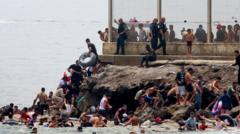
Hundreds of Migrants Swim from Morocco to Ceuta
A significant influx of migrants has reached the Spanish enclave of Ceuta after swimming across the Strait of Gibraltar from Morocco, creating an unprecedented humanitarian and administrative challenge. The migrants swim from Morocco to Ceuta regularly, but this particular crossing has drawn widespread attention due to the sheer number of individuals involved in the attempt.
Resource Strain and Administrative Pressure
Local authorities have expressed serious concerns regarding the capacity of existing infrastructure to accommodate the arriving population. The territory's administrative leadership has publicly stated that current resources are being stretched to their absolute limits, with social services, housing facilities, and medical provisions all operating at maximum capacity.
Territorial Leader Calls for Government Action
The enclave's top official has urgently appealed to the Spanish national government to intervene and implement comprehensive measures to address the ongoing crisis. This appeal underscores the severity of the situation and the inability of local resources to manage the migration surge independently.
Geographic and Strategic Context
Ceuta represents one of Spain's two autonomous cities located on the North African coast, separated from mainland Europe by the Mediterranean Sea and the Strait of Gibraltar. The strategic location makes it a focal point for migrants attempting to reach European territory, as it offers a potential pathway to Spanish and European soil.
The route across the strait, while relatively short in distance, presents significant physical dangers. Migrants attempting to swim from Morocco to Ceuta face treacherous currents, unpredictable weather conditions, and cold water temperatures. Despite these hazards, the migration route continues to attract desperate individuals seeking better economic opportunities and stability in Europe.
Border Management Challenges
Spanish border control agencies have been working around the clock to process the arrivals and manage security protocols. The sudden surge in crossings has overwhelmed standard border procedures, creating bottlenecks in identification and documentation processes. Officials responsible for border security have confirmed that the scale of recent arrivals exceeds normal operational capacity.
International Dimensions
The migration situation at Ceuta represents a broader Mediterranean crisis affecting multiple European nations. Spain, as a Mediterranean country with North African territories, finds itself at the forefront of migration pressures emanating from North Africa and sub-Saharan regions.
Humanitarian Concerns
Beyond administrative challenges, the situation raises significant humanitarian issues. Migrants undertaking dangerous sea crossings often include vulnerable populations, including unaccompanied minors and individuals fleeing persecution or violence. The provision of adequate healthcare, mental health services, and child protection measures has become increasingly difficult given current resource constraints.
Government Response and Next Steps
The Spanish government faces mounting pressure to develop a coordinated response to address both immediate humanitarian needs and longer-term border management strategy. The appeal from Ceuta's leadership suggests that existing agreements and protocols may require revision or supplementation.
Officials are examining potential solutions that could include increased funding for local services, enhanced border enforcement capabilities, and potential regional cooperation agreements. The situation highlights ongoing tensions between European immigration policy and the practical realities of territorial borders positioned near regions experiencing significant migration pressures.
European Policy Implications
This incident contributes to broader European discussions regarding migration management, border security, and international responsibility-sharing. The Schengen Area's open internal borders create additional complexity, as migrants reaching Spanish territory could potentially move freely throughout much of continental Europe.
The government must balance humanitarian obligations, domestic political considerations, and international legal requirements while addressing the immediate crisis at Ceuta. The resolution of this situation may establish precedents affecting future migration management across Spanish and broader European territories.