United States Exits UN Security Council Session Amid France Dispute
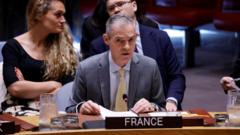
US Departs UN Security Council Meeting During French Remarks
A significant diplomatic tension emerged when the United States left a UN Security Council meeting during France's statement, marking a notable moment of discord at the international organization. This UN Security Council meeting walkout highlighted growing disagreements among permanent members regarding critical humanitarian governance issues.
Background of the Controversial Vote
The confrontation escalated following a contentious voting procedure where the United States cast its ballot alongside Russia and North Korea in opposition to prolonging the mandate of the UN high commissioner for human rights. This alignment brought the American delegation into an unusual partnership with two nations often at odds with Western diplomatic interests.
The decision to vote against the extension represented a significant departure from typical US diplomatic positioning on human rights matters. By joining Russia and North Korea on this particular issue, the United States prompted immediate concern among allies and observers of international governance structures.
The UN Security Council Session and France's Position
France, as a permanent member of the Security Council, presented remarks that apparently triggered the American delegation's decision to withdraw from the chamber. The French government has traditionally maintained strong support for international human rights mechanisms and their oversight bodies.
The departure during the French statement suggested deeper frustrations within the American delegation regarding the direction of discussions or the substance of France's commentary on the human rights commissioner extension vote. This UN Security Council meeting became emblematic of larger rifts developing among Western allies.
Implications for International Relations
This incident carries substantial implications for US-France relations and broader Western coalition unity. The public nature of the walkout demonstrated visible cracks in the traditional alliance structure that has long characterized Security Council dynamics.
The human rights commissioner's role remains crucial for international humanitarian oversight. By voting against its extension, the United States signaled a recalibration of its priorities or objections regarding the commissioner's performance and approach to global human rights issues.
Russia and North Korea's Position
Russia and North Korea's alignment with the United States on this vote surprised observers, though both nations have expressed concerns about international human rights mechanisms they perceive as biased against their interests. Their convergence with American interests on this specific matter illustrated the complex nature of multilateral voting at the Security Council.
Broader Context of UN Diplomacy
The UN Security Council has witnessed increasing polarization in recent years, particularly between Western nations and Russia. The United States' decision to join Russia and North Korea marked a notable rupture in expected voting patterns and alliance formations.
This diplomatic incident UN reflects ongoing tensions regarding the direction and effectiveness of international human rights monitoring. Different member states hold divergent views on whether existing mechanisms adequately balance global security interests with humanitarian concerns.
Future Outlook for UN Human Rights Oversight
The failed extension vote raises questions about the future configuration of human rights oversight at the United Nations. Member states must navigate complex considerations involving national sovereignty, international accountability, and humanitarian principles.
The incident underscores the need for sustained dialogue among Security Council members to rebuild consensus on critical international governance matters. France and other allied nations continue assessing the implications of this unexpected voting coalition.


