Why TV Writers Predict Future Better Than Politicians
How Television Anticipates What Politics Misses
Television writers have demonstrated a remarkable ability to predict future scenarios and social trends, often surpassing politicians in their foresight. From climate catastrophes to political upheaval, TV writers predict future developments through compelling narratives that resonate with audiences. This phenomenon raises important questions about the role of culture in shaping our understanding of what lies ahead.
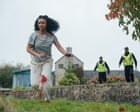
Recent television dramas have showcased this predictive capacity with striking accuracy. The BBC's apocalyptic series explores scenarios that seem to materialize in real life shortly after broadcast. When lead actor Ruth Madeley was interviewed during production, the timing proved eerily prescient. The programme's central narrative involved devastating heat waves across the United Kingdom, and by the time of release, the nation was experiencing record-breaking temperatures. What was intended as speculative fiction became uncomfortably relevant within weeks.
The Rapture and Climate Crisis Realism
The BBC's latest apocalypse drama captures the terrifying reality of climate emergencies with unsettling accuracy. The production team crafted scenarios based on scientific projections and environmental data, creating a narrative that feels disturbingly plausible. As viewers watched scenes depicting extreme weather conditions, they witnessed their own reality reflected on screen, demonstrating how TV writers predict future challenges with precision.
The coincidence between filming and actual climate events underscores a critical insight: television writers often work from rigorous research and scientific understanding. They consult with experts, analyze data, and extrapolate logical consequences of current trends. This methodical approach enables them to craft scenarios that politicians frequently overlook or underestimate in their policy discussions.
Beyond Climate: Cultural Narratives and Social Change
Television's predictive power extends far beyond environmental issues. Apple's Criminal Record explores the emergence of far-right movements and extremist ideologies, presenting narratives that reflect genuine societal tensions. These dramatic explorations serve as cultural warnings, preparing audiences for potential futures while politicians engage in partisan disputes.
The relationship between entertainment and reality demonstrates that culture often serves as an early warning system. Writers, directors, and producers engage with contemporary issues deeply, exploring their implications and potential trajectories. This creative engagement produces narratives that, while fictional, contain kernels of truth grounded in observable reality and logical extrapolation.
Why Politics Lags Behind Cultural Insight
Political decision-makers frequently operate within constrained frameworks shaped by electoral cycles, lobbying pressures, and ideological commitments. These limitations prevent many politicians from engaging in the kind of speculative thinking that TV writers employ. Where politicians must navigate immediate political consequences, television creators can explore uncomfortable futures without the same institutional constraints.
The difference in approach yields measurable results. Television audiences gain exposure to potential futures and their consequences, while political discourse often remains focused on short-term advantages and partisan scoring. This gap explains why TV writers predict future developments more effectively than those supposedly charged with governance.
The Role of Creative Storytelling in Understanding Reality
Television drama serves a function that pure political analysis cannot replicate. By embedding complex issues within human narratives, television creators make abstract concepts tangible and emotionally resonant. Audiences experience climate disasters, political upheaval, and social change through characters they know and care about, creating understanding that transcends data and statistics.
This narrative approach proves particularly effective for communicating long-term consequences of present actions. Politicians often struggle to motivate action on issues whose impacts seem distant or abstract. Television, by contrast, collapses timeframes and intensifies consequences, making future scenarios feel immediate and urgent.
The Intersection of Art and Science
Many contemporary television productions consult extensively with scientific and policy experts. Writers absorb this information and translate it into human stories that explore implications politicians barely acknowledge. This synthesis of scientific understanding and narrative craft creates a unique form of foresight—one grounded in research but expressed through the language of drama.
The success of these predictions lies partly in how television writers predict future scenarios by working from established trends rather than inventing implausible circumstances. They extrapolate logically from current data, consult with experts, and present their conclusions within engaging narratives that capture public imagination.
Learning from Entertainment's Foresight
The remarkable accuracy of television drama in anticipating future events suggests that policymakers should pay closer attention to cultural production. These shows offer not prophecy but educated speculation based on careful analysis of current trajectories. Politicians and planners who dismiss entertainment as mere escapism miss valuable insights embedded in sophisticated storytelling.
Television writers predict future developments because they engage with complexity without institutional pressure to offer simplistic solutions. They explore nuance, consequence, and the human dimensions of crisis. This approach, while ostensibly fictional, often proves more accurate than political discourse preoccupied with immediate advantage and short-term political survival.
As climate crises intensify and social divisions deepen, the predictive capacity of television drama becomes increasingly important. These narratives prepare societies mentally for challenges that seem distant until they arrive with sudden force. In this sense, TV writers predict future realities not through mystical foresight but through disciplined engagement with evidence, expert consultation, and imaginative extrapolation of present trends into logical future scenarios.